Home Solar Designer
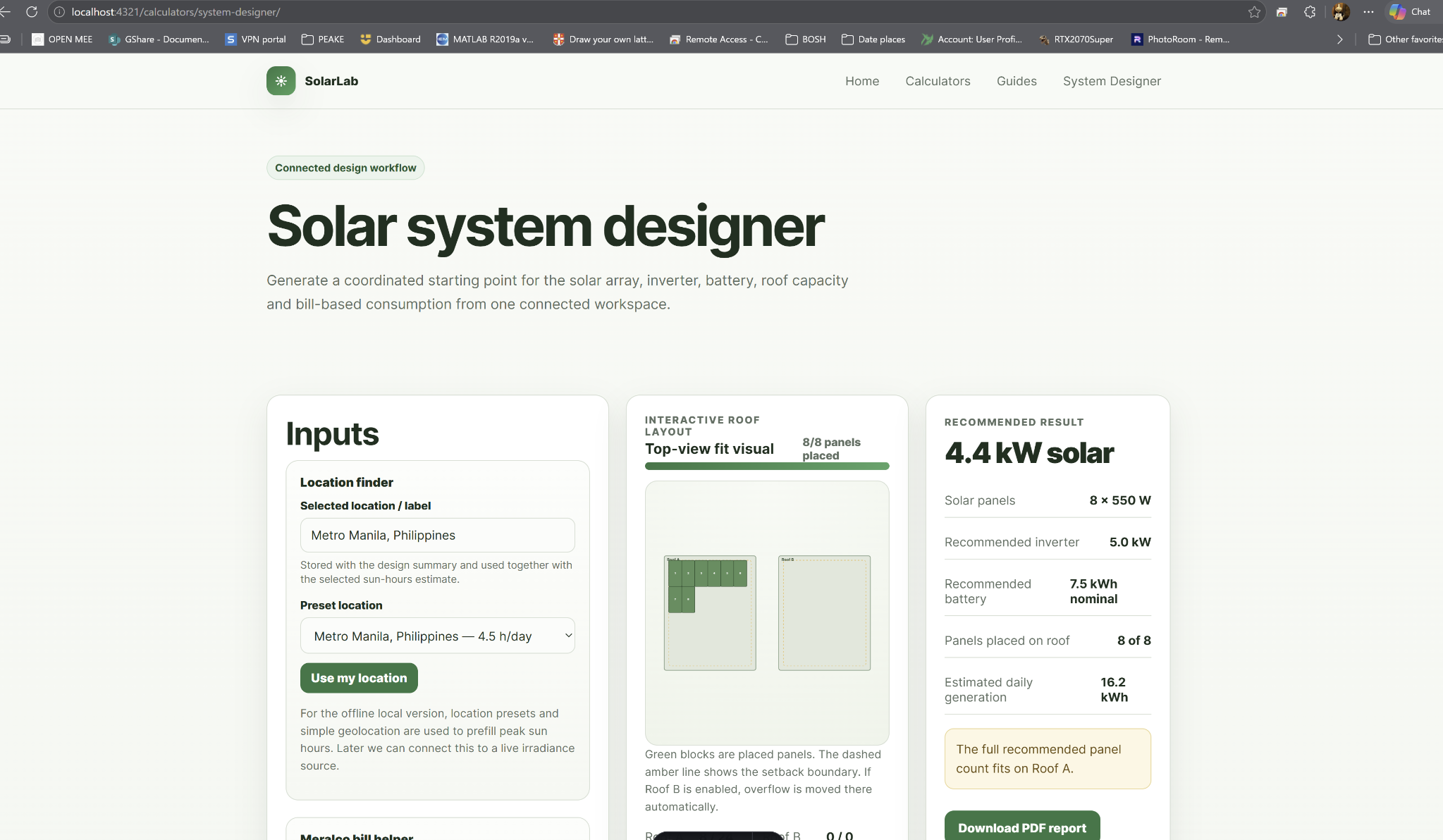
Start with electricity use and roof size, then refine panels, inverter, battery, protection and cost without re-entering the same information.
- Simple / Advanced views
- Roof-fit check
- Editable phase plan
- Downloadable report
Tell us how much electricity your home uses. Solar Plan Lab explains the panel count, inverter size, optional battery, roof fit, build phases, and the questions to ask before you buy.
You do not need to know inverter sizes, battery voltage, breaker ratings, or solar formulas. Solar Plan Lab asks the homeowner questions first and explains every recommendation before you move on.
About 3–5 minutes for a first plan.
You do not need to understand solar equipment before you begin.
Enter monthly kWh, scan a bill, or estimate from appliances.
02Choose your goal, location, roof length and roof width.
03Understand panels, inverter, battery, roof fit, safety and compatibility.
04Edit the phase plan, share the result, then download only when it makes sense.
Start with the homeowner view. Technical detail is available when you are ready for it.

Start with electricity use and roof size, then refine panels, inverter, battery, protection and cost without re-entering the same information.

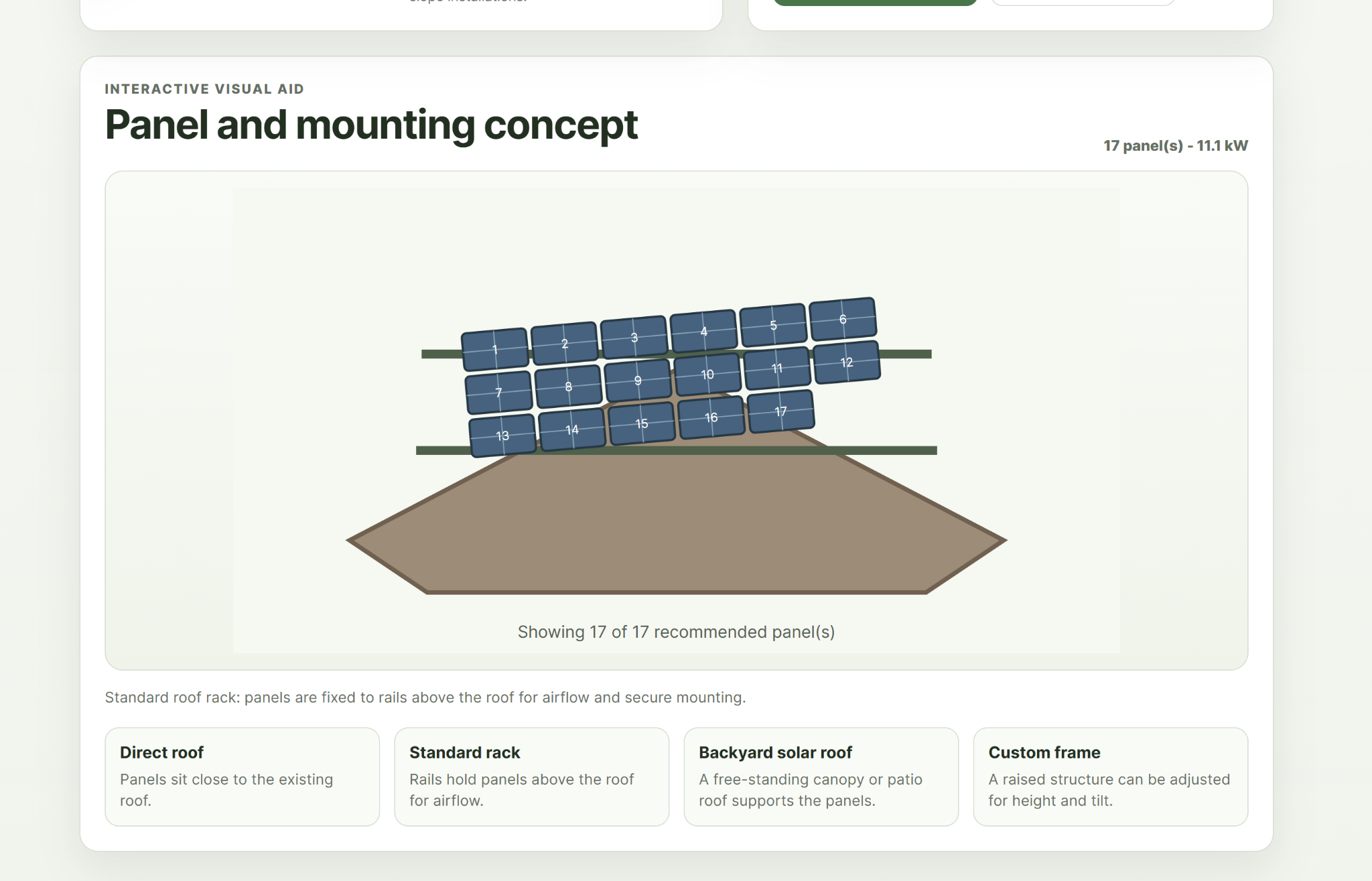
See whether the recommended panel count fits the space you actually have, then explore orientation and mounting assumptions only when needed.

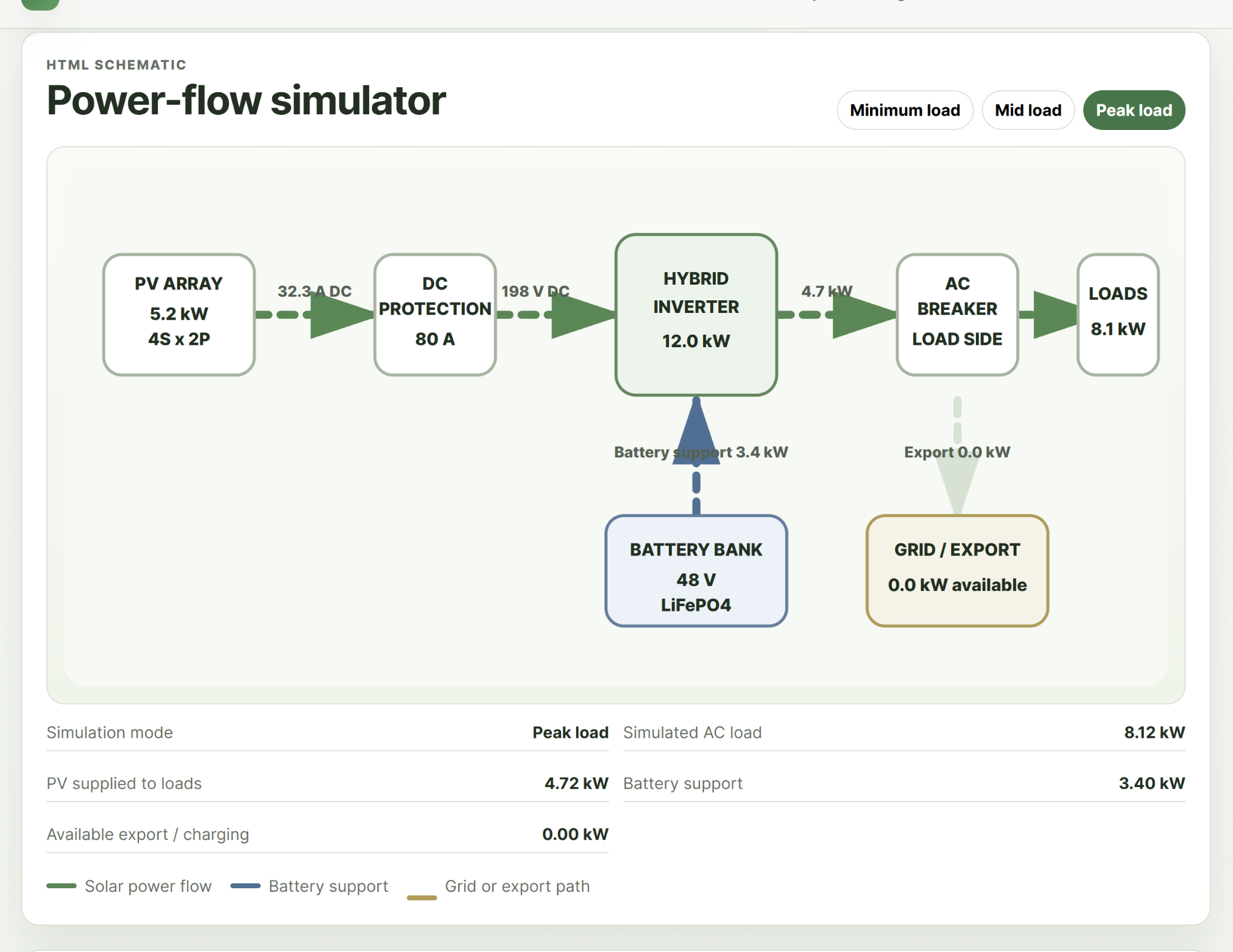
Understand how energy moves through the proposed system and surface basic PV, battery, conductor and protection mismatches before buying hardware.
Solar Plan Lab is built around what happens after a system is switched on: measured consumption, equipment limits, faults, cost decisions, and what should change next.
Why measured use changed the battery roadmap, and what BMS, ATS and cutoff issues taught us.
Read the case study →Check what is missing instead of trying to guess whether a package is “good” from price alone.
Check an installer quote →You should not have to know the words “hybrid”, “grid-tied”, or “off-grid” just to start planning.
Estimate a sensible solar array from monthly usage and understand how much daytime energy it may offset.
Start this plan →Plan inverter and battery capacity around the appliances that matter during outages instead of buying storage blindly.
Start this plan →Use conservative sizing, measured consumption and phased expansion for weak-grid or mostly off-grid goals.
Start this plan →The starter result is based on your inputs and published assumptions, not an installer sales package.
See why a result was recommended and open the methodology when you want to inspect the assumptions.
Core tools work without an account. Bill OCR is designed to run locally and asks you to confirm extracted values.
Start small, phase the project, change equipment, and carry the same project data into deeper tools later.
Use these when you already know what you want to check.
A normal electricity bill is enough to create the first version of your solar plan.