Why Solar Plan Lab exists

A real home system, built in phases and measured instead of guessed.

Solar Plan Lab grew from a practical Philippine DIY solar project: rising electricity costs, intimidating installer packages, configuration faults, and the need for transparent calculations that ordinary homeowners can understand.

No account Instant result Explanation included
1Tell us what you knowStart with the fields you already understand.
2See the recommendationSee the number and why Solar Plan Lab suggested it.
3Refine or downloadChange the plan before you buy or download anything.
New to solar? You do not need to choose a calculator first. Build a guided home solar plan →
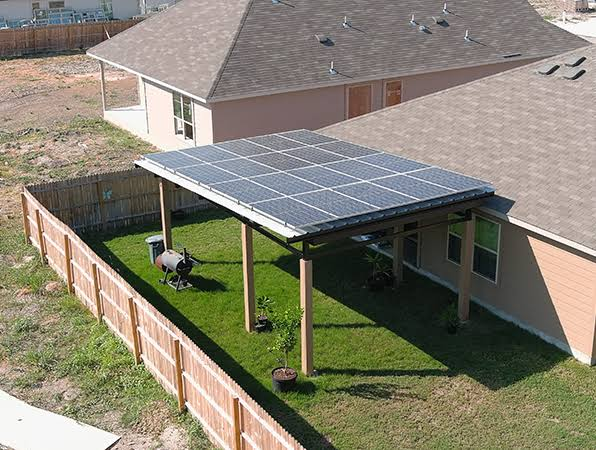
Residential solar array from the project that informed Solar Plan Lab
Built from a real learning process

The project started with four panels, one hybrid inverter, one LFP battery, and a lot of questions.

The public tools are shaped by what actually became difficult: estimating load, checking component limits, understanding source priority, sizing storage, measuring the house, and planning expansion without replacing everything.

Read the detailed case study →
The starting point

Night-shift living changed the household load.

Air conditioning ran through the night for work and during the day for sleep. After a second air conditioner was added, the monthly electricity bill rose from roughly ₱11,000 to about ₱14,500–₱15,500. The initial load estimate was about 16.5 kWh/day, but a Wi-Fi energy meter later showed consumption closer to 21 kWh/day.

Lesson: a bill can start the design, but measurement should guide storage expansion and final operating rules.
The decision

Build knowledge before buying a package.

Installer labour, commissioning, warranty, and accountability have real value. The problem is when a quotation hides component models, undersizes storage, or prevents the homeowner from understanding how the system works. The project therefore used an itemised, phased approach: buy one working stage, measure it, fix the faults, then expand.

Solar Plan Lab principle: every recommendation should show its assumptions, component requirements, and reasons.
Phase 0 — operational baseline

The first working system

PV array4 × 655 W bifacial panels4 panels in series • about 2.62 kW array • approximately 216 V open circuit using the planning profile
Power conversion6.2 kW hybrid inverter48 V-class system • solar, utility input, battery input, and AC output
Storage51.2 V, 100 Ah LiFePO₄ wall battery5.12 kWh nominal • 100 A BMS continuous-current ceiling
Transfer and monitoringATS + Wi-Fi energy meterInverter output preferred • utility as fallback • whole-house load measured at the ATS output
Important correction: one 51.2 V, 100 A battery cannot continuously supply the inverter's full 6.2 kW rating by itself. At nominal voltage, 100 A is approximately 5.12 kW before conversion losses. Heavy-load operation therefore depends on solar/grid contribution or additional compatible batteries and protection.
What went wrong

The faults became product requirements.

01

BMS communication fault

The inverter and battery did not communicate until the correct lithium protocol and RS485 mode were selected. Solar Plan Lab now treats communication protocol as a compatibility field instead of assuming that matching voltage is enough.

02

Grid-charging and ATS oscillation

A grid-charging mode caused repeated source switching as battery voltage moved around the transfer thresholds. Changing the operating strategy to solar-only charging stopped the loop. Solar Plan Lab therefore separates energy-source priority, grid charging, and ATS behaviour in its schematic guidance.

03

Low-voltage cutoff was too conservative

A conservative cutoff stranded usable battery capacity and produced warnings before the pack was meaningfully depleted. The correct value is product-specific: final thresholds must follow the battery, BMS, inverter documentation, and measured cell behaviour—not a universal internet setting.

Known first-stage cost baseline

Itemised instead of packaged.

These figures are historical reference costs for the documented build, not a universal quotation.

4 × 655 W panels₱26,000
6.2 kW hybrid inverter₱15,000
51.2 V, 100 Ah wall battery₱49,000
Safety, protection, monitoring, enclosure, and wiring baseline~₱14,218
Known equipment and BOS baseline~₱104,218

Mounting structure, labour, delivery, permits, structural work, and later expansion are excluded unless separately entered.

Phased roadmap

Measure, expand, verify.

1. Stabilise the first system

Confirm inverter settings, source transfer, monitoring, and real daily energy demand.

2. Expand storage deliberately

Add compatible batteries only after measured night-time demand and BMS current requirements are understood.

3. Expand the PV array

Recalculate series voltage, MPPT range, current, cable, protection, and roof fit before adding panels.

4. Verify off-grid operation

Run a sustained test with utility power retained as backup before calling the system independent.

The purpose

Make the knowledge gap smaller.

Solar Plan Lab does not replace an electrician, structural engineer, manufacturer manual, or site inspection. It gives homeowners a clearer starting point, exposes assumptions, and makes it harder for a design mismatch to stay hidden.